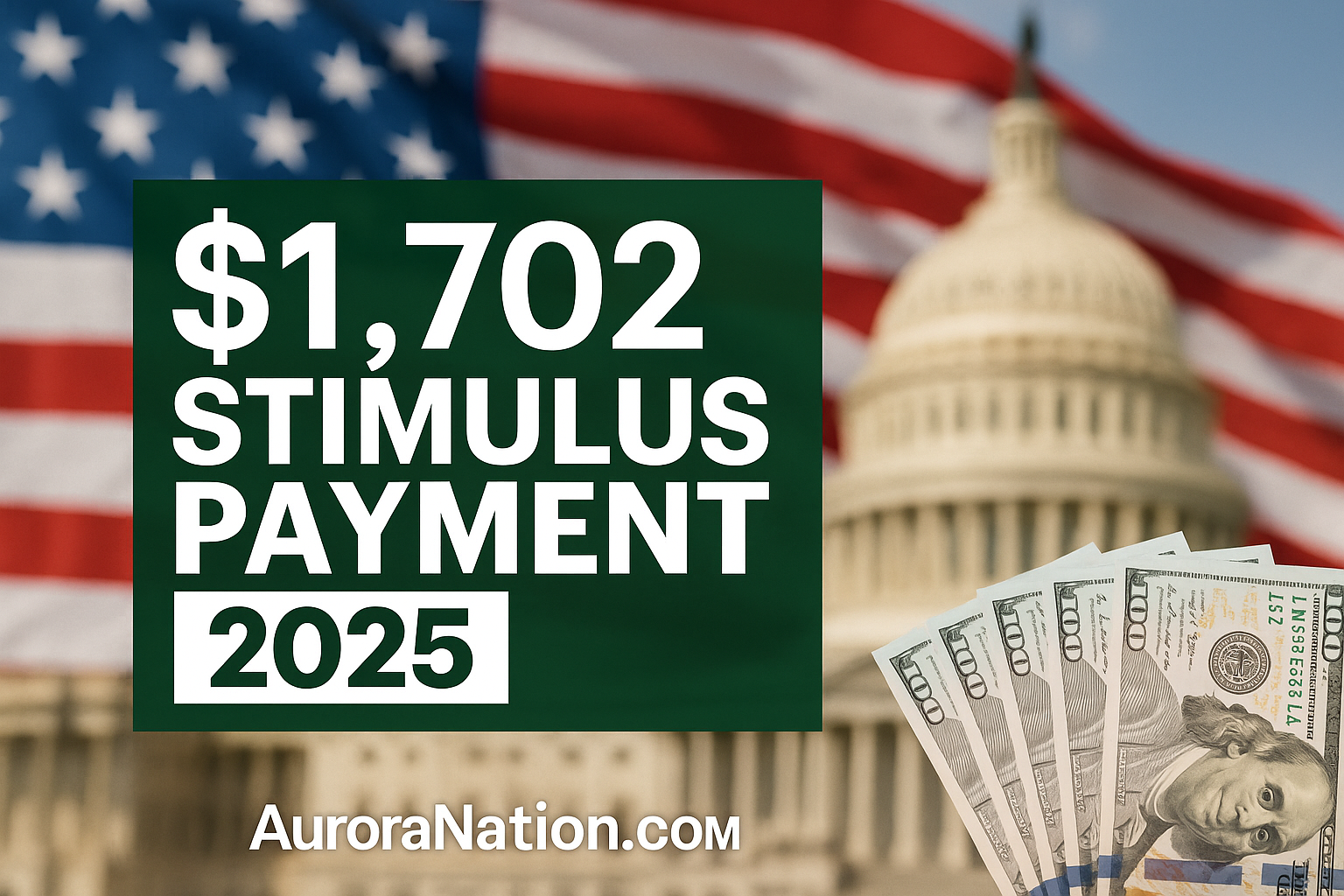
Across the United States, millions of Americans have been searching for updates about a $1702 stimulus paymentrumored to be coming in October 2025. Social media has flooded with claims that a new round of relief checks is being distributed by the federal government — but how much of this is true?
Let’s break down what’s actually happening, who might qualify for real benefits, and how to make sure you don’t fall for misinformation.
Social Security Disability (SSDI) 2025–2026: How Much Will You Get and Who Qualifies?
What Is the $1702 Stimulus Payment?
The term “$1702 stimulus payment” has gone viral in recent weeks, sparking confusion among many citizens expecting new federal aid. However, there is currently no new federal stimulus check officially approved by Congress or confirmed by the IRS.
So, where does the $1702 figure come from?
Analysts believe the number is tied to a mix of state-level rebates, tax credits, and inflation relief programs, as well as confusion with ongoing Social Security Cost-of-Living Adjustments (COLA) and Earned Income Tax Credit (EITC)increases for 2025. In other words, some people could indeed see extra funds this fall — just not as a national “stimulus check.”
What’s Actually Happening in October 2025?
Although there is no national stimulus, several legitimate programs could result in payments being deposited into American bank accounts in October 2025:
- Social Security COLA Increase: The 2025 COLA adjustment increased average Social Security payments by around 3.2%, which means retirees may notice higher monthly deposits.
- State Inflation Relief Programs: Some states, including California, Colorado, and Alaska, continue to distribute state-level rebates and dividends.
- Tax Refunds & Credits: Many low-income and middle-class Americans will receive Earned Income Tax Credit (EITC) or Child Tax Credit (CTC) payments during the fall.
Together, these programs can amount to an average total increase of roughly $1,500–$1,700 for some households — which likely fueled the “$1702 payment” headlines.
Understanding the Source of the Rumor
Financial experts suggest the rumor started online after misleading social media posts claimed that the U.S. Treasury or IRS was launching a fourth stimulus program. In reality, the Biden administration has not approved any new federal stimulus checks since 2021.
Some viral posts used legitimate program updates — such as Social Security COLA increases or state carbon rebate payments — and blended them with speculation, creating confusion among readers.
Real Payments Americans Could Receive
Here’s a summary of verified payments Americans may actually receive around October 2025:
| Program | Average Payment | Eligibility | Distribution Date |
|---|---|---|---|
| Social Security (COLA-adjusted) | $1,550–$1,750 | Retirees, disabled workers, survivors | Monthly (as per birth date) |
| Child Tax Credit (CTC) | Up to $300 per child | Families earning below income thresholds | Mid to late October |
| Earned Income Tax Credit (EITC) | $600–$1,200 | Low to moderate-income workers | Ongoing tax season refunds |
| Alaska PFD (Dividend) | $1,312 | Alaska residents meeting eligibility | October 2025 |
| State Rebates (CA, CO, NM) | $250–$1,000 | Varies by state income level | Varies (October–November) |
Could a New Federal Stimulus Still Happen?
While there’s no approved federal stimulus, Washington lawmakers continue to discuss targeted relief programs. Economists believe if inflation or unemployment worsens, a new stimulus could resurface — though likely on a state-specific or income-targeted basis rather than a nationwide payment.
Financial analysts also note that the IRS and Treasury now focus more on tax credits and inflation rebates instead of blanket stimulus checks.
How to Check If You’re Eligible for Any 2025 Payments
Even though there’s no “$1702 stimulus,” millions may still qualify for financial aid through existing programs:
- Check the IRS portal for your 2024–2025 tax return refund status.
- Visit your state revenue website for rebate or carbon credit updates.
- If retired, review your Social Security increase notice (COLA).
- Families with children should verify CTC eligibility with updated income limits.
- Avoid online scam sites that ask for personal or banking details claiming to release your “stimulus check.”
Expert Insight: What Economists Are Saying
Economists emphasize that these rumors, while misleading, highlight how fragile financial conditions remain for many households. Dr. Lisa Hargrove, a senior financial analyst based in Washington, D.C., said:
“When people hear about extra payments, it’s often because real benefits are happening — just under different programs. The key is to identify which one applies to you, not to rely on viral claims.”
This means that while you won’t see a $1702 stimulus labeled by the IRS, you could still benefit from COLA adjustments, EITC boosts, or state-level rebates that together bring similar relief.
What to Expect Next
- No nationwide $1702 check is scheduled.
- State and federal assistance programs will continue through the fall.
- The next Social Security COLA announcement for 2026 is expected in December 2025.
- IRS tax refund deposits continue into late 2025 for those who filed extensions.
Frequently Asked Questions (FAQs)
Q1. Is the $1702 stimulus payment real?
No, there is currently no federal $1702 stimulus payment. The number is likely based on a mix of COLA, CTC, and state rebates.
Q2. Who can still get financial help in 2025?
Retirees, parents with children, low-income workers, and Alaskan residents may receive legitimate funds through verified government programs.
Q3. Is the IRS sending new checks in October 2025?
No, the IRS is not issuing new stimulus checks. However, ongoing refunds and credits are still being processed.
Q4. Can I qualify for any $1,700+ payments?
Yes, if you are eligible for Social Security COLA, state rebates, or EITC/CTC benefits, your combined payments could total around that figure.
Q5. How to avoid scams?
Never share personal details or pay fees to claim a “stimulus.” Always verify through official government portals like irs.gov or ssa.gov.
Final Takeaway
While the $1702 stimulus payment rumor may not hold up under scrutiny, many Americans are still set to receive real and significant financial boosts this fall. Whether it’s through Social Security adjustments, tax credits, or state rebates, this period remains one of financial opportunity — for those who stay informed and cautious.
For verified updates on U.S. payments, follow AuroraNation.com, your trusted source for reliable benefit and payment news.