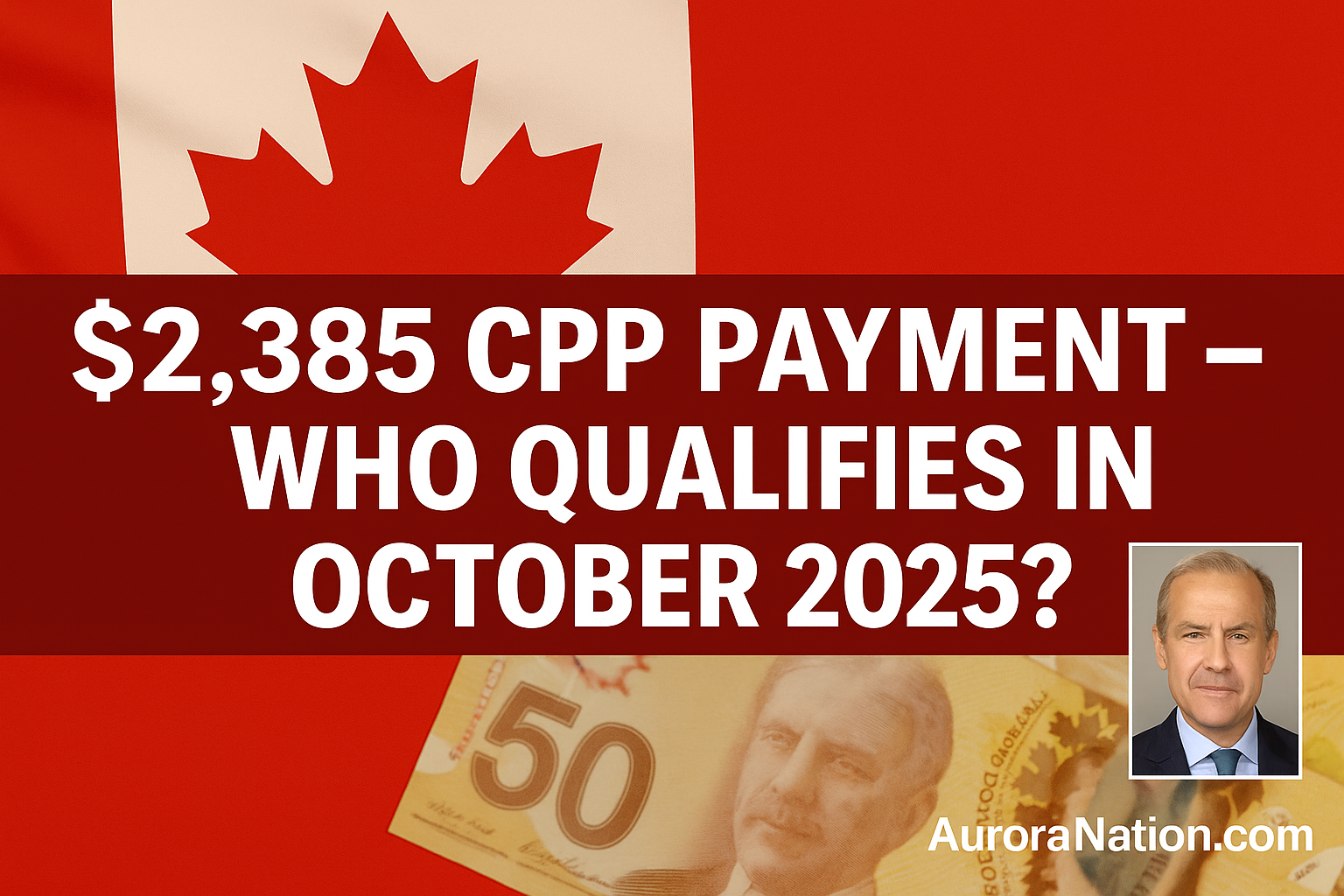
As Canada approaches October 2025, many online posts and videos are buzzing about a so-called “$2385 CPP payment”CPP Payment in October 2025 — sparking confusion among retirees and future pensioners. Some claim it’s a special one-time payment or new monthly increase. But what’s the truth? Let’s break it down clearly and factually.
Also read:CPP and OAS Cost-of-Living Adjustment 2026: How Much Will Benefits Increase?
Understanding CPP: What It Actually Pays
The Canada Pension Plan (CPP) is one of the country’s main retirement income programs. It’s not a fixed payment — what you receive depends entirely on:
- How much you contributed during your working years
- How long you contributed
- The age you choose to start collecting
For 2025, the maximum monthly CPP retirement amount for someone starting at age 65 is projected to be around $1,433 per month.
However, this is the maximum — only Canadians who consistently contributed the highest allowable amounts to CPP for nearly 40 years can receive it. The average payment is usually much lower, closer to $800 to $900 per month.
So where does the $2385 number come from?
The Real Meaning Behind the “$2385 CPP Payment”
That figure doesn’t represent a new benefit from CPP itself. Instead, it likely reflects the total combined value of government benefits that some retirees may receive in a month, including:
- CPP (Canada Pension Plan)
- OAS (Old Age Security)
- GIS (Guaranteed Income Supplement)
A senior who qualifies for maximum CPP, full OAS, and top-level GIS could see their total monthly benefit reach around $2385, depending on income level and living situation.
In other words, $2385 is not a single payment from CPP — it’s a combination of multiple federal programs working together to support retirees.
CPP Payment Details for October 2025
CPP payments are issued every month, typically around the last business week of the month.
For October 2025, the expected deposit date is around October 29 or 30, depending on banking schedules.
Payments are sent automatically to registered recipients via direct deposit or cheque, depending on the setup in your Service Canada account.
If you’re already receiving CPP, your payment will appear under “Canada Pension Plan” in your account statement, usually between the 27th and 31st of each month.
Who Actually Qualifies for the Maximum CPP Amount
Only a small percentage of Canadians receive the full CPP rate. To reach the maximum, you must:
- Have contributed to CPP for at least 39 of the last 40 years.
- Have earned at or above the Year’s Maximum Pensionable Earnings (YMPE) during those years.
- Begin collecting CPP at age 65 (or later, for an even higher benefit).
If you worked part-time, had career breaks, or earned less than the annual maximum contribution limit, your CPP amount will be proportionally lower.
OAS and GIS: The Other Pieces of the Puzzle
Old Age Security (OAS)
- Paid to most Canadians aged 65+ who have lived in the country for at least 10 years.
- The maximum monthly OAS in 2025 is expected to be around $720–$760.
- Amounts can rise slightly every quarter with inflation adjustments.
Guaranteed Income Supplement (GIS)
- GIS is an additional payment for low-income seniors who already receive OAS.
- The maximum GIS benefit for single seniors is about $1,100 per month in 2025.
- Married or common-law recipients receive a different (usually smaller) amount.
When combined — maximum CPP ($1,433) + OAS (~$760) + GIS (~$1,100) — the total monthly income can reach roughly $2385.
That’s where the viral number comes from.
Fact Check: Is a Special CPP Bonus Coming in October 2025?
No, there is no confirmed bonus or one-time payment of $2385 from CPP or the Government of Canada.
The government has not announced any new lump-sum payments for October 2025. All CPP and OAS payments will continue as scheduled — based on your individual contribution record and eligibility.
The misconception likely began from social media posts misinterpreting combined benefit totals as a new “extra payment.”
How to Check What You’ll Actually Get
You can see your estimated CPP, OAS, or GIS payment amounts through My Service Canada Account (MSCA). Once logged in:
- View your contribution summary and estimated CPP payment.
- Check your OAS and GIS status and future payment projections.
- Verify your direct deposit information to avoid delays.
If you’re nearing retirement, the Retirement Income Calculator available through Service Canada can estimate your combined benefit income under different start ages (60, 65, 70).
Tips to Increase Your CPP Income
- Delay Your Start Date: Each month you delay collecting CPP after age 65 boosts your payment by 0.7% — up to 42% more at age 70.
- Work Longer: More years of contributions can replace lower-earning years in your record.
- Check for Missing Contributions: If your employer didn’t remit properly or you worked self-employed, review your record to ensure all contributions are credited.
- Consider CPP Enhancement: The expanded CPP program gradually increases future benefits for contributors who pay the higher rates introduced after 2019.
Frequently Asked Questions (FAQs)
1. Is the $2385 CPP payment real?
No — it’s not a separate payment. It refers to the total possible income from CPP, OAS, and GIS combined for eligible seniors.
2. When is the CPP payment in October 2025?
It’s expected in the final week of October, usually around October 29–30, 2025.
3. Who gets the highest CPP benefit?
Canadians with full contribution histories and maximum earnings between ages 18–65.
4. Can I receive CPP, OAS, and GIS at the same time?
Yes, if you qualify for each. Many low-to-moderate income seniors receive all three.
5. Will CPP amounts increase again in 2026?
Yes, CPP and OAS are indexed annually to inflation. Payment rates typically rise slightly every January.
Final Takeaway
The “$2385 CPP payment” isn’t a one-time windfall — it’s a combination of benefits that only certain seniors can reach through maximum eligibility.
In 2025, most Canadians will continue receiving their usual CPP, OAS, and GIS payments on schedule, with modest annual adjustments for inflation.
Understanding how these benefits fit together — and how to maximize yours — is the best way to ensure stability in retirement.
Stay tuned to AuroraNation.com for verified, Canadian-focused updates on CPP, OAS, GIS, and other federal programs that affect your income, benefits, and financial security.