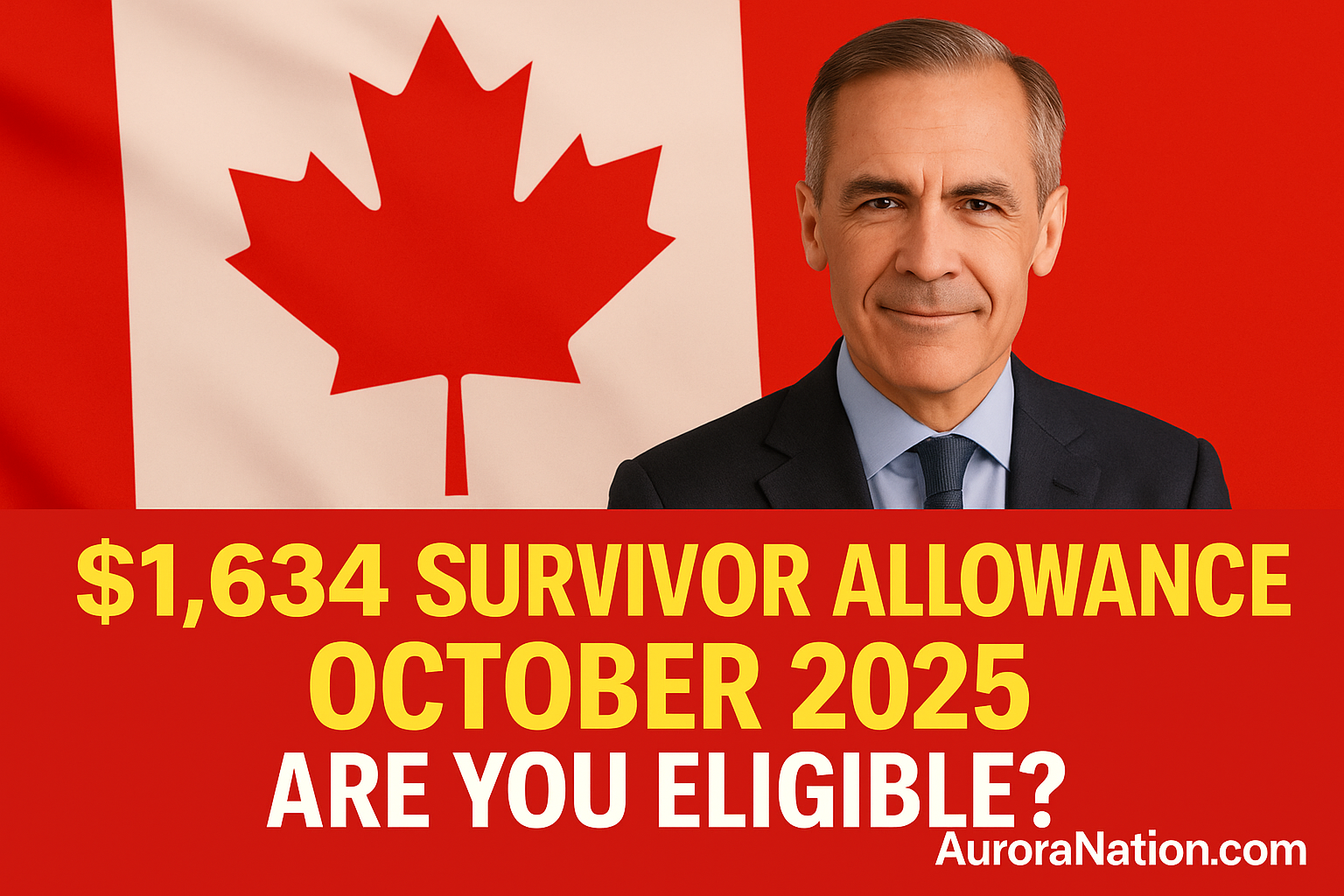
As the cost of living continues to climb across Canada, seniors and near-retirees are relying more than ever on government support programs to maintain stability. Among these is the Survivor Allowance, a monthly payment designed for Canadians aged 60 to 64 who have lost a spouse or common-law partner and have limited income.
In October 2025, eligible individuals could receive up to $1,647.34 per month — a significant boost that can help bridge the financial gap until they reach full Old Age Security (OAS) and Guaranteed Income Supplement (GIS) eligibility at age 65.
This article breaks down who qualifies, how the amount is determined, and when the October 2025 payments are expected to arrive.
Also read: CPP and OAS Cost-of-Living Adjustment 2026: How Much Will Benefits Increase?
What Is the Canada Survivor Allowance?
The Survivor Allowance, officially called the Allowance for the Survivor, is part of the broader Old Age Security program. It provides income support to individuals aged 60 to 64 whose spouse or common-law partner has died and who have a modest or low annual income.
The benefit acts as a bridge between the time a person loses their partner and the point when they become eligible for regular OAS and GIS benefits at age 65.
In simple terms, it’s financial relief for widowed Canadians who haven’t yet reached senior pension age but need help making ends meet.
How Much You Can Get in 2025
For October 2025, the maximum monthly Survivor Allowance is estimated to reach $1,647.34. This amount reflects quarterly adjustments based on inflation and cost-of-living increases.
However, not everyone will receive the full amount. The payment depends on your annual net income. The lower your income, the closer you’ll be to the maximum benefit.
Here’s a general overview of how amounts vary:
- Those earning below $25,000 annually may receive the full $1,647.34.
- Individuals with incomes between $25,000–$29,000 may receive a reduced payment, typically between $800–$1,400 per month.
- Anyone earning above roughly $30,000 usually becomes ineligible.
This structure ensures that the support is targeted toward those who truly need it most.
Who Qualifies for the Survivor Allowance in 2025
Eligibility for this benefit is straightforward but specific. To qualify for the October 2025 payment, you must meet all of the following conditions:
- You are between 60 and 64 years old.
- Your spouse or common-law partner has passed away.
- You have not remarried or entered another common-law relationship.
- You reside in Canada and have lived here for at least 10 years after age 18.
- Your annual income is below the allowable limit, generally under $30,000.
If all these apply, you could be eligible to receive payments starting as early as the month following your application approval.
When October 2025 Payments Will Arrive
The Survivor Allowance is paid monthly, following the same schedule as Old Age Security (OAS). Payments usually fall on the third-last business day of each month.
For October 2025, the payment is expected to be deposited in the last full week of the month, likely around October 28–29, depending on weekends and holidays.
Those receiving payments by direct deposit will see funds arrive faster, often one day earlier than mailed cheques.
If your application is still being processed by that time, you may later receive retroactive payments covering up to 11 months from your eligibility date.
Why the Amount Changes Every Few Months
The Survivor Allowance is adjusted quarterly to keep up with Canada’s inflation rate. The government reviews the Consumer Price Index (CPI) every three months to determine if the cost of living has risen.
If inflation continues its steady pace, the next adjustment — effective October 2025 — will likely include a modest increase from the previous July 2025 rate.
Even during periods of low inflation, benefit amounts never decrease. Once raised, they remain at that level or higher, ensuring financial stability for recipients.
How to Apply
Applying for the Survivor Allowance is relatively simple and can be done through Service Canada. Applicants can apply either online or by mail using a paper application.
You’ll need to provide documents such as:
- Proof of age (e.g., birth certificate or passport)
- Proof of your spouse’s or partner’s death
- Proof of income (such as your latest tax return or T4 slip)
- Social Insurance Number (SIN)
Once your application is submitted, it usually takes several weeks to process. If approved, your payments will start the month after eligibility is confirmed, and you may also qualify for retroactive payments if you applied late.
What Happens When You Turn 65
The Survivor Allowance is designed to support Canadians only until they reach age 65.
Once you hit that milestone, your Allowance automatically ends, and you may transition to Old Age Security (OAS) and possibly the Guaranteed Income Supplement (GIS) if your income remains below certain levels.
In many cases, individuals moving from the Survivor Allowance to OAS actually maintain similar or slightly higher total monthly benefits, helping them avoid financial disruption.
Examples: How the Benefit Helps Real Canadians
To understand the real impact of this payment, consider these examples:
- Mary, 62, from Ontario:
After losing her husband two years ago, Mary works part-time and earns about $20,000 annually. She qualifies for the full $1,647.34 monthly payment, which covers her rent and basic living expenses. - Jean, 61, from Quebec:
Jean earns $27,000 from a small pension and part-time job. His Survivor Allowance is reduced to around $1,200per month, which helps him manage rising food and utility costs. - Helen, 63, from Alberta:
Helen earns $32,000 from investment income. Because her income is above the threshold, she no longer qualifies. She will become eligible for OAS once she turns 65.
These examples reflect how income levels determine monthly amounts, making the program flexible yet focused on helping those in genuine need.
Key Differences from CPP Survivor Benefits
Many Canadians confuse the Allowance for the Survivor with the CPP Survivor’s Pension, but they are separate programs.
- CPP Survivor’s Pension is based on your late partner’s CPP contributions.
- Survivor Allowance is income-tested and part of the OAS system, not tied to CPP work history.
- You can qualify for both, but your combined income still affects the Allowance amount.
Together, these programs form a safety net for widowed Canadians transitioning toward retirement.
Tips for Applicants
- Apply as soon as you’re eligible. Don’t wait for age 65 — this program is specifically designed for ages 60–64.
- Use direct deposit. Payments arrive faster and more securely.
- Keep your income updated. If your income drops midyear, notify Service Canada — your payment could increase.
- Review annually. Since income and inflation affect benefits, review your eligibility every year.
What to Expect Going Into 2026
While no official announcement has been made yet, experts expect the Survivor Allowance to continue rising gradually in 2026, possibly exceeding $1,670 per month if inflation remains steady.
The government’s ongoing focus on affordability for seniors suggests these supports will remain strong as more Canadians approach retirement age.
Final Takeaway
The Canada Survivor Allowance remains one of the country’s most important yet lesser-known benefits. With payments reaching $1,647.34 per month in October 2025, it offers essential stability for Canadians who have lost a spouse and are not yet eligible for full OAS.
If you’re between 60 and 64 years old, have limited income, and live in Canada, this program could help you manage expenses during one of life’s most challenging transitions.
Applying early ensures timely payments — and peace of mind.