Toronto, November 2025:
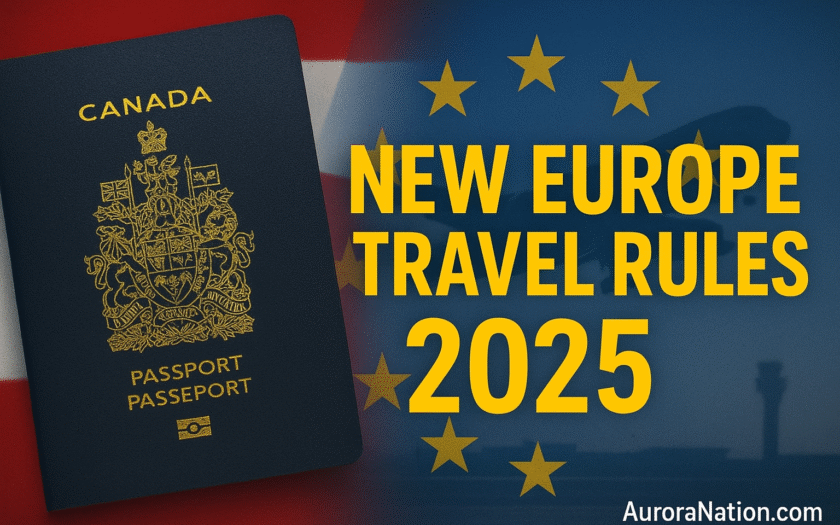
Canadian travellers heading to Europe will soon experience a major shift at international borders. As the European Union implements advanced digital systems for entry and exit, Canada Europe travel security is entering a new era driven by technology, safety, and cooperation between the two regions.
Starting in 2025, travellers can expect biometric verification, digital data collection, and pre-travel authorisations — part of a broader plan to strengthen both security and convenience across borders.
Also read: Canada Revenue Agency $680 Payment: Breaking News Update for November 2025
Also read:CRA Direct Deposit November 2025: How Much You Can Receive from CRA Benefits
What’s Changing Under the Canada Europe Travel Security Program
At the heart of this transformation is the Entry/Exit System (EES) — a European Union initiative replacing manual passport stamps with biometric and digital tracking.
Under this system, Canadian travellers entering or leaving the Schengen area will have their fingerprints and facial image recorded and stored in a secure European database.
Officials say the change will help prevent overstays, detect document fraud, and modernize Canada Europe travel security through real-time data sharing. Each traveller’s entry and exit will now be digitally logged, improving the accuracy of border management and stay duration tracking.
Canadians planning to visit multiple European countries should check the Government of Canada travel advisory and read our in-depth EES preparation guide before their next trip.
ETIAS: A New Layer of Digital Travel Security
By late 2026, Canadians will also need to apply for the European Travel Information and Authorisation System (ETIAS) — an online travel authorisation similar to Canada’s eTA.
Applicants will complete a brief online form, pay a processing fee (around €7–€20), and receive approval before departure. The system automatically screens travellers for security, immigration, and health-related risks.
According to EU officials, ETIAS is a cornerstone of Canada Europe travel security, ensuring safer, faster, and more transparent travel for both continents.
For a detailed walkthrough, refer to our ETIAS Application Guide for Canadians to avoid delays or rejections.
Why the EU Is Making These Changes
European authorities argue that the reforms are necessary to tackle increasing travel volumes, illegal overstays, and global security challenges.
The EES and ETIAS systems mark a decisive move toward digital border management — replacing outdated manual checks with automated verification and recordkeeping.
The EU emphasizes that visa-free travel for Canadians will remain intact. However, under the Canada Europe travel security framework, every traveller will now be pre-screened to enhance safety while maintaining smooth entry.
Learn more about this shift in our analysis on global border digitization and travel security.
What Canadian Travellers Should Expect
Here’s how these changes will affect Canadian visitors to Europe:
- Biometric registration: Canadians must provide fingerprints and a facial scan on arrival.
- Digital data storage: Passport stamps will be replaced by electronic entry and exit logs.
- 90/180-day rule tracking: The system will automatically record travel durations.
- ETIAS authorisation: Required before departure once the system launches.
- Longer processing initially: Early implementation may cause slight delays.
- Additional checks: Proof of stay, return flight, or funds may be requested at entry.
To prepare efficiently, read our practical guide on navigating new European border checks.
Expert Insights on Canada Europe Travel Security
Travel policy experts say these measures signal stronger cooperation between Canada and the EU.
“Europe’s border upgrades aren’t about restricting travel; they’re about modernizing it,” said Toronto-based travel consultant Priya Deshmukh. “The Canada Europe travel security program ensures both continents maintain safer, more organized movement while preserving visa-free access.”
Deshmukh recommends renewing passports to ensure they include biometric chips and verifying information through official websites only.
How Canadians Can Prepare for the Transition
- Renew your passport if it’s older or non-biometric.
- Check official updates on travel.gc.ca.
- Apply early for ETIAS once registration begins.
- Keep digital and printed proof of flights and accommodations.
- Arrive early at airports during the transition period.
- Use travel apps to track stay durations within the Schengen Zone.
You can also refer to our comprehensive travel preparation checklist for additional guidance.
Why It Matters
The introduction of biometric checks and ETIAS pre-screening marks a major leap in Canada Europe travel security.
These upgrades reflect a shared commitment to safe, digital, and efficient travel, ensuring Canadians can continue exploring Europe with confidence and minimal disruption.
While the transition may bring temporary delays, the long-term benefits — stronger protection, accurate tracking, and faster processing — will redefine the future of international mobility.
Conclusion
The modernization of Canada Europe travel security demonstrates how global travel is evolving toward smarter, technology-driven systems.
Canadians will continue to enjoy visa-free access to Europe, but the experience will now include more digital verification steps and enhanced border protection.
As both continents embrace innovation and cooperation, Canadian travellers can expect safer, faster, and more reliable journeys across European destinations.