A New Era Begins: FIFA World Cup 2026 Schedule
The FIFA World Cup 2026 schedule signals a defining shift in the history of international football. For the first time, the tournament will feature 48 teams and span across three nations — the United States, Canada, and Mexico — setting the stage for the largest World Cup ever held.
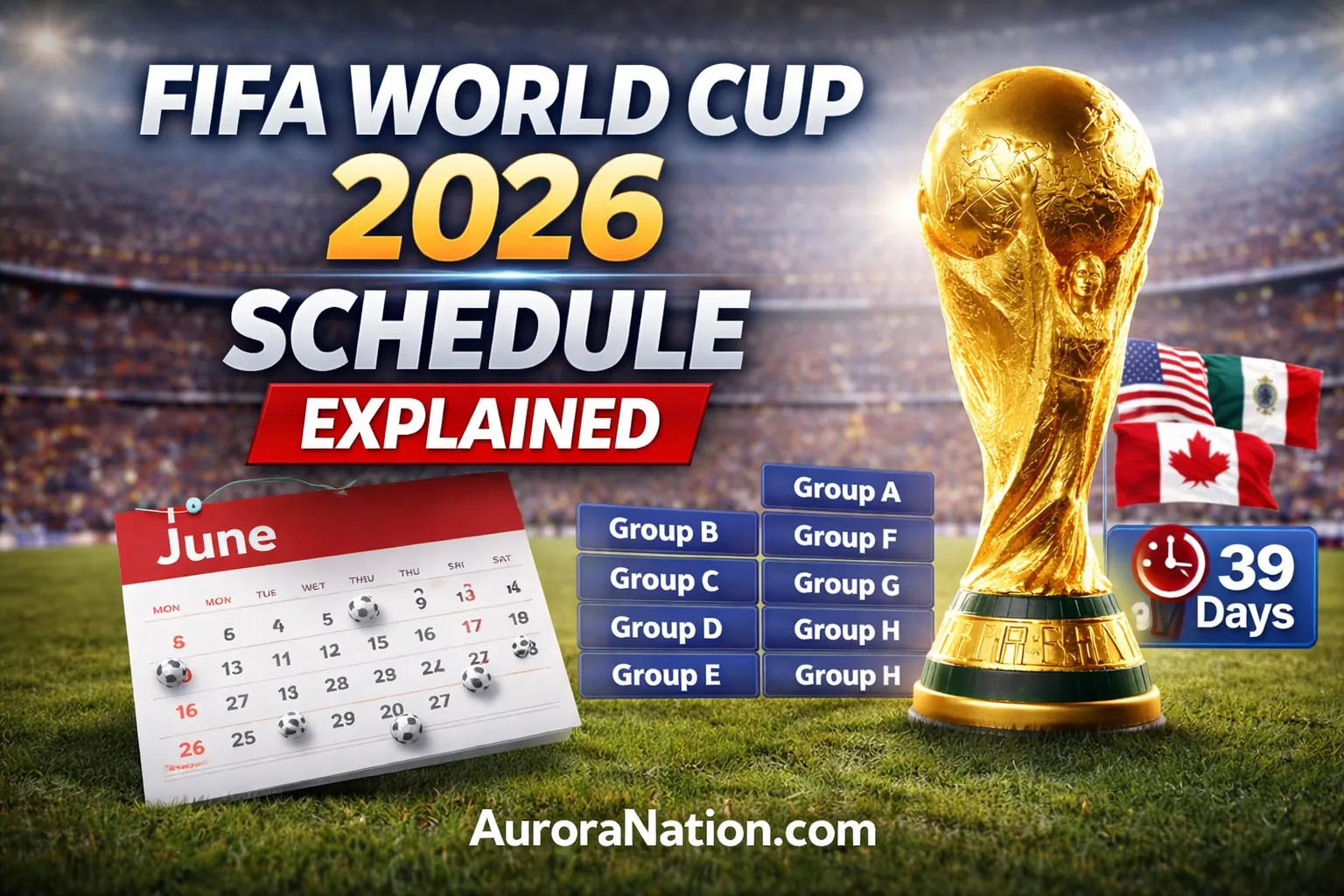
As outlined on the official FIFA World Cup 2026 platform, the tournament is expected to run from early June to mid-July 2026, maintaining its traditional summer slot while expanding in both scale and complexity.
Related Posts:
FIFA World Cup 2026 Tickets Guide: Prices, Booking & How to Avoid Scams
FIFA World Cup 2026 Stadiums & Host Cities Guide: Full List, Capacity & Key Venues
Key Dates That Will Shape the Tournament
While FIFA is yet to release the full fixture list, the broader timeline of the FIFA World Cup 2026 schedule is already taking shape.
- Opening Match: Early June 2026
- Group Stage: First two to three weeks
- Knockout Phase: Late June onwards
- Final: Mid-July 2026
The extended calendar reflects the tournament’s expansion and aligns with structural changes confirmed in global reporting on FIFA’s new 48-team format.
104 Matches Across Three Nations
The scale of the FIFA World Cup 2026 schedule is unprecedented. With 104 matches, the competition will surpass every previous edition in volume and reach.
Games will be staged across 16 host cities, with the United States hosting the majority, while Canada and Mexico will play key roles in the tournament’s opening stages. According to the Government of Canada’s official World Cup 2026 overview, the multi-country model is designed to maximize fan access and global engagement.
Group Stage: A Broader Battlefield
The group stage remains the foundation of the FIFA World Cup 2026 schedule, but with a significantly expanded structure:
- 12 groups of 4 teams
- Each team plays 3 matches
- Top 2 teams qualify automatically
- 8 best third-placed teams advance
This format ensures a longer competitive window and reduces early exits for top-ranked teams, while giving emerging nations a realistic path into the knockout rounds.
Also read: Top 10 Strongest Teams in FIFA World Cup 2026 (Early Predictions)
Knockout Stage: More Pressure, More Drama
The introduction of a Round of 32 marks one of the most significant changes in the FIFA World Cup 2026 schedule.
From this stage onward, the tournament follows a traditional single-elimination path:
- Round of 32
- Round of 16
- Quarterfinals
- Semifinals
- Final
With more teams entering the knockout phase, the margin for error becomes even smaller — a single result could define a nation’s entire campaign.
Travel, Time Zones, and Tournament Complexity
Unlike previous editions, the FIFA World Cup 2026 schedule presents a logistical challenge on a continental scale. Teams will travel across vast distances, navigating multiple time zones and varying climates.
For supporters, this adds both excitement and complexity, as planning match attendance will require careful coordination. FIFA is expected to release detailed match allocations and city schedules closer to the tournament.
Why the 2026 Schedule Stands Out
The FIFA World Cup 2026 schedule is more than just an expansion — it represents a strategic shift in how the tournament is structured and delivered.
- Greater global representation
- Increased number of high-stakes matches
- Expanded commercial and broadcasting reach
At the same time, discussions around player workload and scheduling intensity continue to shape the conversation around this new format.
Final Word
The FIFA World Cup 2026 schedule sets the stage for a tournament unlike any before it. With more teams, more matches, and a broader geographic footprint, it promises to redefine the scale of international football.
For fans, it is not just a competition — it is a global event that will unfold over six weeks, delivering moments that could shape the future of the game.