Table of Contents
In 2025, thousands of Canadian families raising children with disabilities are expected to receive extra support through the Canada Child Disability Benefit 2025(CDB). This tax-free federal payment, which supplements the Canada Child Benefit (CCB), aims to ease the additional financial pressure parents face while caring for a child with severe or prolonged impairment.
The upcoming benefit year brings some important updates — including new payment amounts, eligibility guidelines, and key filing reminders for parents who want to make sure they don’t miss out on this essential financial aid.
What Is the Canada Child Disability Benefit 2025 (CDB)?
The Canada Child Disability Benefit is a tax-free monthly payment issued by the Canada Revenue Agency (CRA) to families who qualify for both the Canada Child Benefit (CCB) and the Disability Tax Credit (DTC).
Unlike other federal assistance programs, the CDB does not require a separate application. Once a child’s DTC is approved and the parent or guardian receives the CCB, the CRA automatically adds the CDB to the family’s monthly payments.
The CDB is intended to help cover costs related to medical care, therapy, specialized equipment, and other essential needs unique to children living with disabilities.
How Much Is the Canada Child Disability Benefit in 2025?
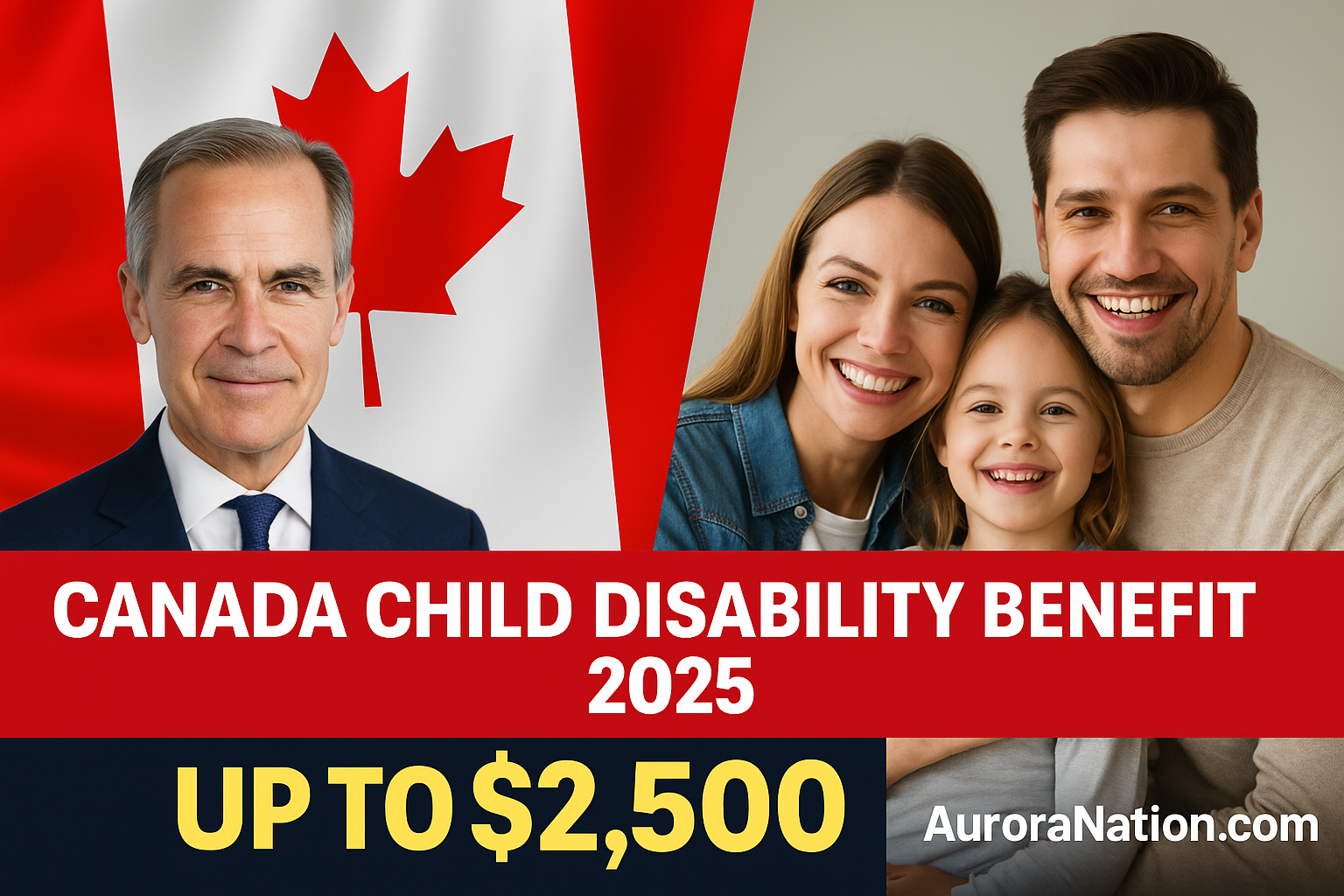
For the 2025 benefit year, families could receive up to $2,500 or more per eligible child annually, depending on household income and the number of dependents.
While the exact amount varies by income bracket, the maximum monthly payment for low-income households typically exceeds $200 per child, adding up to more than $2,400 per year.
Higher-income families may receive smaller amounts due to a gradual phase-out mechanism based on adjusted family net income (AFNI).
This sliding scale ensures that families who need the most support receive the largest benefit — a cornerstone principle of Canada’s child assistance system.
Who Qualifies for the Canada Child Disability Benefit in 2025?
Eligibility for the 2025 CDB remains straightforward, but families must meet both CCB and DTC requirements. To qualify:
- The child must be under the age of 18.
- The child must be eligible for the Disability Tax Credit (DTC). This requires certification from a medical practitioner confirming a severe and prolonged impairment that markedly restricts daily living.
- The applicant must be eligible for the Canada Child Benefit (CCB) for that child.
- Both the parent and child must reside in Canada and be considered residents for tax purposes.
- The parent or guardian must have filed their annual tax return for the previous year, as CRA uses income information to determine benefit amounts.
If your child qualifies for the DTC and you already receive the CCB, there’s no need to apply separately — the CRA automatically adds the CDB to your payments.
When Are the Payments Sent?
The Canada Child Disability Benefit is paid monthly, along with the regular Canada Child Benefit (CCB).
Payment dates for the 2025–2026 period will typically align with CCB’s schedule — usually falling around the 20th of each month.
The benefit period runs from July 2025 to June 2026, based on the 2024 tax return. Filing your taxes on time each year ensures uninterrupted payments.
How the Payment Is Calculated
The CRA calculates your CDB using your adjusted family net income (AFNI) from the previous tax year.
- Families with incomes below approximately $80,000 may receive the full benefit amount (around $2,500 per year).
- As income rises above that threshold, the benefit gradually decreases — usually by a few percentage points per dollar over the limit.
- Families with multiple eligible children can receive additional amounts per child, though reductions are also scaled for higher-income levels.
The formula is designed to make the benefit progressive, meaning that families in lower income brackets receive more help, while higher-income earners receive partial or no CDB.
Key Differences Between CDB and Other Benefits
While the Canada Child Benefit (CCB) supports all eligible families, the Child Disability Benefit specifically addresses the higher costs faced by those caring for children with disabilities.
The CDB is also distinct from the Canada Disability Benefit (for adults), which is expected to expand in 2025 under separate federal legislation.
Families receiving provincial disability assistance (such as ODSP in Ontario or AISH in Alberta) typically continue to receive full CDB payments, as this benefit is federal and non-taxable — meaning it usually does not reduce provincial supports.
How to Ensure You Receive the 2025 CDB
Many eligible families miss out on the benefit simply because they haven’t completed all required steps. Here’s how to make sure you’re covered:
- Confirm DTC Approval — Your child’s Disability Tax Credit must be approved by the CRA. Ask your medical practitioner to complete Form T2201 (Disability Tax Credit Certificate).
- File Your Taxes — Both parents (if applicable) must file their 2024 tax returns. Even if you have no income, filing ensures CRA can determine your eligibility.
- Update Family Information — Notify CRA of any changes in marital status, custody arrangements, or address.
- Check Direct Deposit Settings — Ensure your bank details with CRA are accurate for smooth payment transfers.
- Monitor Your CRA Account — You can track your CCB and CDB payments through your “My Account” on CRA’s website.
What the 2025 Updates Mean for Families
The 2025 CDB updates reflect Canada’s broader focus on reducing child poverty and supporting inclusivity in public benefits.
With inflation continuing to challenge family budgets, the indexed increases in CCB and CDB payments mean that more money will flow directly to households managing medical, educational, and care-related costs for children with disabilities.
The new indexed rate ensures that even as prices rise, the value of the benefit keeps pace with the cost of living.

What to Expect in the Future
The federal government has signalled an ongoing review of disability benefits across Canada. With the upcoming Canada Disability Benefit Act expected to influence adult payments, experts believe similar indexing models will keep improving the Child Disability Benefit as well.
Future adjustments could include higher thresholds, faster DTC approvals, or improved coordination with provincial programs — ensuring that families continue to receive meaningful financial support.
Frequently Asked Questions (FAQs)
Q: How much is the Child Disability Benefit in 2025?
Families could receive up to $2,500 per child annually, depending on income and DTC eligibility.
Q: When will I receive my CDB payments?
Payments are issued monthly, alongside the CCB, around the 20th of each month.
Q: Can I still receive CDB if my child receives provincial disability support?
Yes. The CDB is a federal, tax-free payment and typically does not affect provincial benefits.
Q: Do I need to reapply each year?
No. As long as your child remains eligible for the DTC and you file taxes annually, payments will continue automatically.
Q: Can new parents apply mid-year?
Yes. Once your child is approved for the DTC, CRA will adjust payments retroactively to cover eligible months.
Final Takeaway
The Canada Child Disability Benefit 2025 remains a crucial source of financial relief for families supporting children with disabilities.
With payments reaching up to $2,500 per year, this tax-free supplement helps cover the real costs of care — from medical equipment to specialized learning support.
Filing taxes early, maintaining your child’s DTC status, and keeping your CRA profile updated are the best ways to ensure you never miss a payment.
As Canada strengthens its commitment to inclusion and accessibility, the CDB stands as one of the most meaningful supports for families who need it most.