Key Highlights
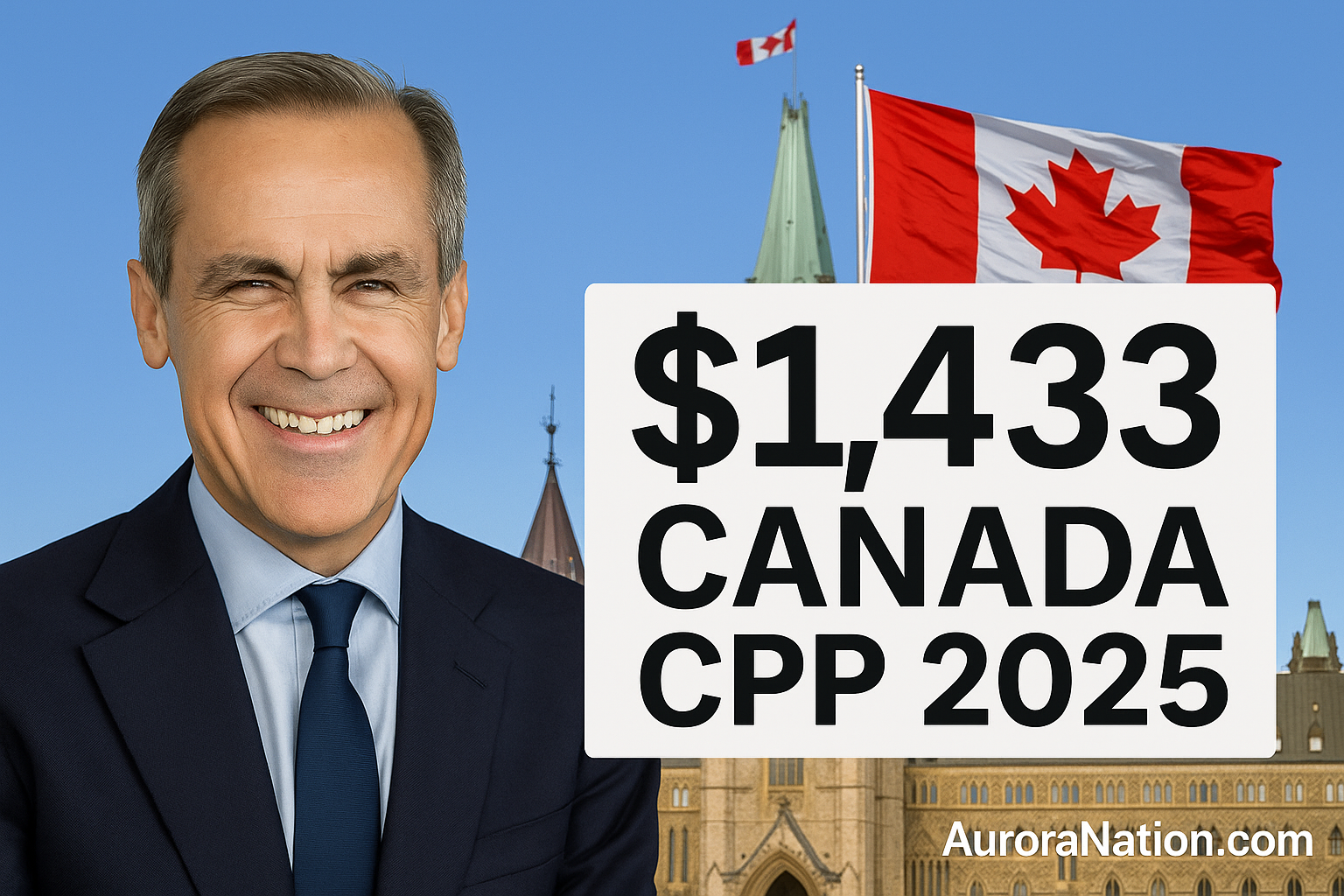
- The maximum CPP monthly payment for 2025 is projected at $1,433.05, up from $1,364.60 in 2024.
- The average CPP monthly amount Canadians actually receive is about $835, depending on lifetime contributions.(Canada CPP 2025)
- The CPP contribution limit rises to $68,500, with a basic exemption of $3,500.
- Payment dates for 2025 follow the last-week schedule each month, starting January 29, 2025.
- Experts say CPP payouts are expected to rise modestly again in 2026 due to inflation indexing.
What the CPP Really Is — and Why It’s Important
The Canada Pension Plan (CPP) is one of the country’s most critical retirement programs, providing monthly taxable benefits to eligible contributors who have worked and paid into the plan during their careers.
CPP and OAS Cost-of-Living Adjustment 2026: How Much Will Benefits Increase?
Every employed or self-employed Canadian outside Quebec contributes to CPP, helping ensure an income base after retirement, disability, or death.
Financial experts describe CPP as a “steady anchor” in retirement planning — predictable, inflation-protected, and backed by the federal government.
“The CPP remains one of Canada’s most stable social programs,” financial observers note. “While the maximum payment grabs attention, most Canadians receive less because they haven’t contributed at the top level for 39 years.”
CPP Payment Amounts in 2025
In 2025, the maximum CPP payment for new recipients at age 65 is expected to rise to approximately $1,433.05 per month, reflecting Canada’s average wage growth.
However, fewer than 10% of retirees qualify for this maximum. The average monthly CPP benefit paid to new beneficiaries in late 2024 was around $835, and it’s expected to hover near that mark next year.
| CPP Payment Type (2025) | Estimated Monthly Amount (2025) | Notes |
|---|---|---|
| Maximum Retirement Benefit (Age 65) | $1,433.05 | For those with full 39-year max contributions. |
| Average Monthly Payment | $835.00 | Based on national average in 2024 adjusted for inflation. |
| Early Retirement (Age 60) | ~$1,018 | 36% reduction for early collection. |
| Late Retirement (Age 70) | ~$1,821 | 42% increase for deferral to age 70. |
| CPP Disability Benefit (avg) | $1,110 | For eligible disabled contributors. |
| CPP Survivor Benefit (avg) | $710 | Based on partner’s contributions. |
CPP Contribution Rates and Limits in 2025
Working Canadians continue to fund their CPP through automatic payroll deductions. In 2025, both employees and employers contribute 5.95% of pensionable earnings.
| Category | 2024 | 2025 (Projected) | Change |
|---|---|---|---|
| Contribution Rate (Employee/Employer) | 5.95% | 5.95% | No change |
| Maximum Annual Pensionable Earnings (YMPE) | $68,500 | $73,200 | ↑ $4,700 |
| Basic Exemption | $3,500 | $3,500 | Unchanged |
| Max Contribution (Employee) | $3,867.50 | ~$4,150 | ↑ $282 |
| Max Contribution (Self-Employed) | $7,735 | ~$8,300 | ↑ $565 |
Self-employed Canadians must pay both the employer and employee portions, effectively 11.9% of eligible income.
Who Qualifies for CPP in 2025
To qualify for CPP benefits, you must:
- Be at least 60 years old
- Have made at least one valid contribution to CPP
- Be a Canadian resident or have contributed while working in Canada
The amount you receive depends on:
- Years of contribution
- Total earnings throughout your working life
- Age at which you start collecting CPP
Starting early (age 60) results in a reduction of 0.6% per month before age 65. Waiting until age 70 increases your benefit by 0.7% per month, or 42% total.
CPP Payment Schedule for 2025
Payments are typically made on the last Wednesday of each month, except December, when they are advanced for the holidays.
| Month | CPP Payment Date (2025) |
|---|---|
| January | January 29, 2025 |
| February | February 26, 2025 |
| March | March 26, 2025 |
| April | April 29, 2025 |
| May | May 28, 2025 |
| June | June 25, 2025 |
| July | July 30, 2025 |
| August | August 27, 2025 |
| September | September 24, 2025 |
| October | October 29, 2025 |
| November | November 26, 2025 |
| December | December 19, 2025 |
How to Apply for CPP
Canadians can apply for CPP online through My Service Canada Account or by submitting a paper application. It’s best to apply six months before you want payments to begin.
Required documents include:
- Social Insurance Number (SIN)
- Proof of birth (if requested)
- Direct deposit information
Once approved, CPP is paid monthly via direct deposit or cheque (though digital payments are now standard).
CPP Enhancements — What’s Changing in 2025
Starting in 2019, Canada began phasing in CPP enhancements, gradually increasing contribution limits and future benefit payouts.
By 2025, these enhancements reach Phase 2, meaning higher contributions today will translate into higher retirement benefits later.
Financial experts say the impact will benefit younger Canadians most, as the full effect builds over decades of contribution.
“Workers under 40 will see the biggest reward from CPP enhancements,” retirement analysts explain. “It’s a long-term investment that boosts lifetime income security.”
How Much CPP Will You Actually Get?
While the maximum payment of $1,433.05/month is impressive, most Canadians fall below that figure.
The average worker earning around $60,000 annually and contributing consistently for 35 years could expect roughly $900–$1,000 per month starting at age 65.
Experts recommend viewing CPP as just one pillar of retirement income — alongside personal savings, workplace pensions, and OAS/GIS benefits.
CPP and Inflation — What to Expect in 2026
CPP benefits are indexed annually based on the Consumer Price Index (CPI). With inflation expected to remain moderate in 2025, the 2026 CPP adjustment could be between 3.5% and 4%, depending on wage growth.
That means the maximum benefit could exceed $1,480/month by January 2026 if current economic trends hold steady.
Taxation and Combined Benefits
CPP payments are taxable income.
Recipients can request voluntary tax deductions or choose to pay at tax time.
Many retirees also combine CPP with:
- Old Age Security (OAS) — average $720/month
- Guaranteed Income Supplement (GIS) — up to $1,100 for low-income seniors
Together, these can total between $2,200 and $2,500/month, depending on income and eligibility.
Common Questions About CPP 2025
Q: Can I receive CPP and still work?
Yes. You can work while receiving CPP, and you can even continue contributing to increase your benefit through the Post-Retirement Benefit (PRB).
Q: Is there a survivor benefit for CPP?
Yes. Surviving spouses or common-law partners may receive a monthly payment based on the deceased contributor’s CPP record.
Q: Can CPP payments ever decrease?
No. Once approved, CPP benefits only increase with annual inflation adjustments.
Q: What happens if I live outside Canada?
CPP payments can be deposited to international bank accounts in most countries through direct deposit arrangements.
Final Thoughts
The Canada Pension Plan (CPP) continues to provide a vital income stream for millions of retirees and workers nearing retirement age.
With the maximum monthly benefit increasing to $1,433.05 in 2025, Canadians can expect modest but steady growth in their pension income.
While few qualify for the full amount, most will see inflation protection and gradual improvements under the CPP enhancement plan.
Financial experts urge Canadians to plan early, contribute consistently, and consider delaying benefits if possible to maximize long-term income.