Table of Contents
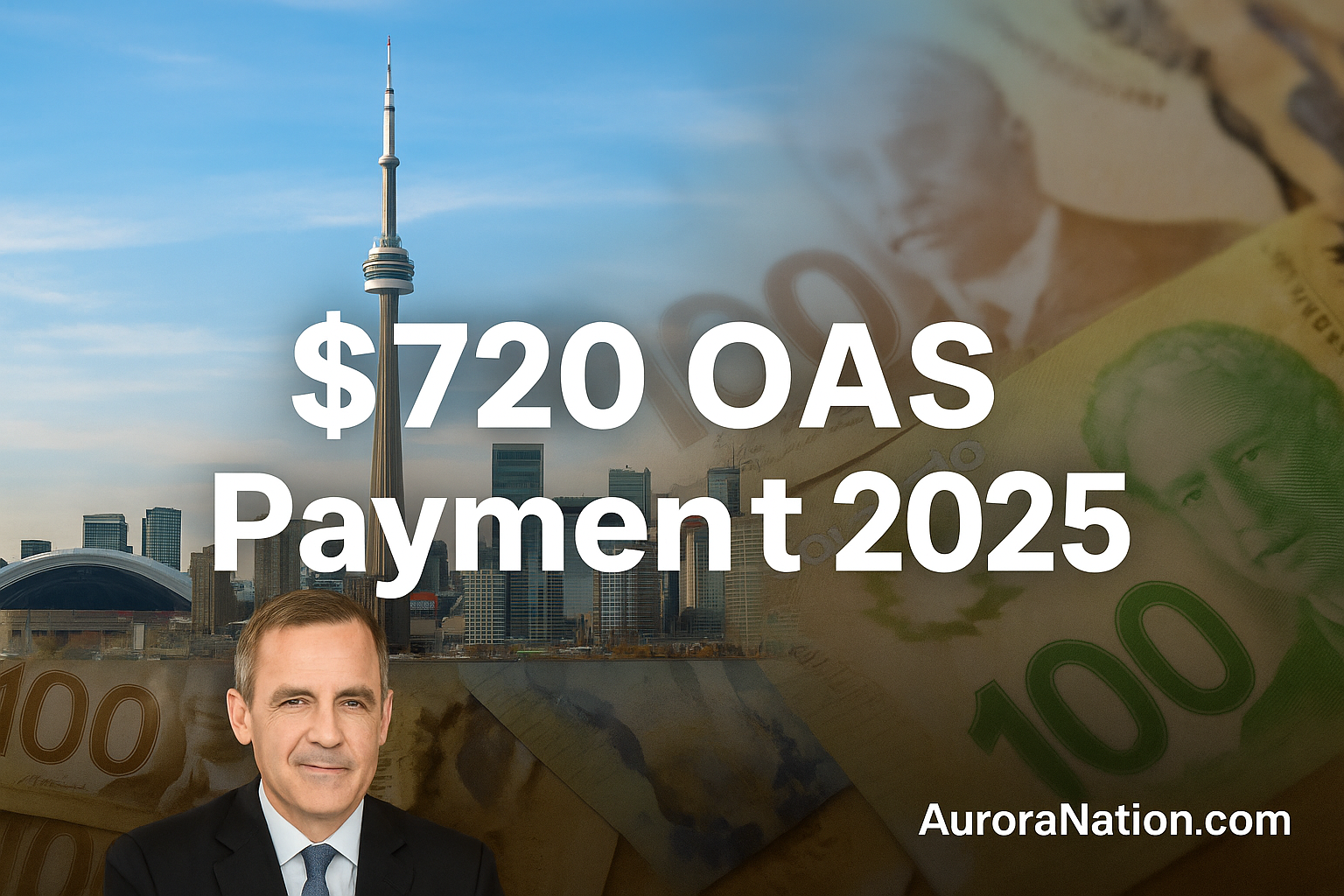
Canada’s retirees are set to receive another financial boost as Old Age Security 2025(OAS) payments rise again this fall. Beginning October 2025, millions of seniors will see higher monthly deposits as part of the federal government’s quarterly adjustment tied to inflation.
The latest update pushes the average monthly OAS payment to more than $720, marking another step in the government’s ongoing effort to keep seniors’ incomes aligned with the rising cost of living.
Also read: CPP and OAS Cost-of-Living Adjustment 2026: How Much Will Benefits Increase?
Understanding Old Age Security : The Backbone of Canada’s Retirement System
The Old Age Security program is one of Canada’s oldest and most trusted social benefits. It provides a steady monthly payment to citizens and permanent residents aged 65 and above — regardless of employment history.
Unlike the Canada Pension Plan (CPP), which depends on how much you contributed while working, OAS is based primarily on residency and age. For many retirees, especially those without large private savings, this payment forms a critical part of their monthly income.
What’s Changing in Old Age Security 2025
The Government of Canada reviews OAS rates four times a year — in January, April, July, and October — adjusting them to match inflation measured by the Consumer Price Index.
In October 2025, seniors will see another modest increase. For those aged 65 to 74, the new maximum payment climbs slightly above $720 per month, while Canadians aged 75 and older will receive more than $800 monthly thanks to a permanent 10% supplement introduced in 2022.
This marks one of the strongest cumulative increases since the pandemic, as food, rent, and medical costs continue to rise nationwide.
Old Age Security 2025 Payment Dates
The October 2025 OAS payment will be issued on October 29, landing directly in seniors’ bank accounts through the federal direct deposit system.
Here’s the full 2025 OAS payment calendar for reference:
| Month | Payment Date |
|---|---|
| January | January 29 |
| February | February 26 |
| March | March 27 |
| April | April 28 |
| May | May 28 |
| June | June 26 |
| July | July 29 |
| August | August 27 |
| September | September 25 |
| October | October 29 |
| November | November 26 |
| December | December 22 |
Those who still receive physical cheques can expect delivery a few days later, depending on mail processing in their area.
Eligibility Requirements for Old Age Security 2025
To qualify for OAS, an individual must:
- Be 65 years or older.
- Be a Canadian citizen or legal resident.
- Have lived in Canada for at least 10 years after age 18 (for a partial pension) or 40 years (for a full pension).
If you have fewer than 40 years of residency, your OAS is prorated based on how long you’ve lived in Canada.
Canadians living abroad may still receive OAS if they resided in the country for at least 20 years after age 18 or have a social security agreement with another nation.
The Old Age Security 2025 Clawback: What High-Income Seniors Need to Know
Not all seniors receive the full benefit. Those with higher incomes may face the OAS Recovery Tax, commonly known as the clawback.
For the 2025 tax year, the clawback begins when a senior’s net world income exceeds roughly $93,000, gradually reducing payments by 15 cents for every dollar above that amount. The benefit is fully phased out around $151,000 in annual income.
The government automatically adjusts the clawback threshold each year to reflect inflation and wage growth.
Extra Support: GIS and Allowance
In addition to OAS, low-income seniors can qualify for the Guaranteed Income Supplement (GIS) — a monthly, non-taxable payment that tops up income for individuals and couples living on limited means.
Those aged 60 to 64 whose spouse receives OAS may also qualify for the Allowance, while widowed individuals in the same age range can apply for the Allowance for the Survivor.
These programs ensure that even seniors with little or no savings receive consistent monthly support.
Should You Delay OAS?
Canadians can choose to delay receiving OAS for up to five years after age 65. For each month delayed, the benefit increases by 0.6%, up to a maximum of 36% at age 70.
This can be a smart move for those still working past 65 or earning enough income to trigger a clawback. However, delaying means forfeiting years of payments upfront — so it’s a personal decision that depends on health, income, and life expectancy.
Inflation and OAS: What’s Ahead for 2026
Economic forecasters expect another round of OAS increases in 2026 as inflation remains above the Bank of Canada’s long-term target. If consumer prices continue rising, seniors can anticipate a quarterly boost averaging 0.5% to 0.8%, keeping benefits aligned with real-world costs.
Analysts also expect the base OAS rate for 75+ recipients to exceed $820 per month by late 2026, driven by inflation and cost-of-living adjustments.
How to Check or Update Your Old Age Security 2025 Information
Seniors can access their payment details through their My Service Canada Account (MSCA). The portal provides real-time updates on payment history, deposit dates, and GIS eligibility.
To avoid payment delays, make sure:
- Your direct deposit information is up to date.
- Your annual income tax return is filed on time — OAS and GIS payments depend on reported income.
- You review your clawback risk if your income fluctuates near the threshold.
Final Takeaway
The October 2025 OAS adjustment is a welcome relief for millions of Canadian seniors facing higher living costs. With average payments now exceeding $720 per month, the program continues to anchor Canada’s retirement income system.
For lower-income households, OAS combined with GIS can make a substantial difference — often exceeding $1,400 monthly in total benefits.
While not enough to erase inflation pressures, this steady, indexed increase ensures older Canadians maintain stability and dignity in retirement.